Back
|
Back
|
| Paul Studios, Eastbourne. Rebuilt AGI ARL S/A Mark II (Small Aircraft, Aerial Camera) 120 roll film ,results gallery. |

|
I wasn't expecting much from the ARL conversion, given the appalling state it was in when donated. Anything would be a bonus. The camera is a little limited as it is fitted with a 4.2" (105mm) focal length lens, a focal length of 75mm would normally be the standard for this 6 x 6cm format. This harks back to when it was an aerial camera, the conversion kept the original Hall Brothers lens. As it was originally intended for aerial use, it seemed appropriate to test the camera out on aerial subjects. So the very first image taken is this Spitfire sculpture mounted on a tripod arrangement outside of Southampton Airport. Formerly Eastleigh Airport, this is where the first Spitfire made the type's maiden flight back in March 1936, a whisker over 90 years before this image was taken in May 2026. Taken directly into sun has caused a few issues and the shutter speed was 500th sec. I was expecting possible capping issues as the spring rollers were quite rusty as received and I had no idea if the tension remaining in them was evenly distributed. The image is remarkably sharp but there is a certain amount of scattering from the fairly extensive scratching on the objective and balsam degradation on the rear group. |
|
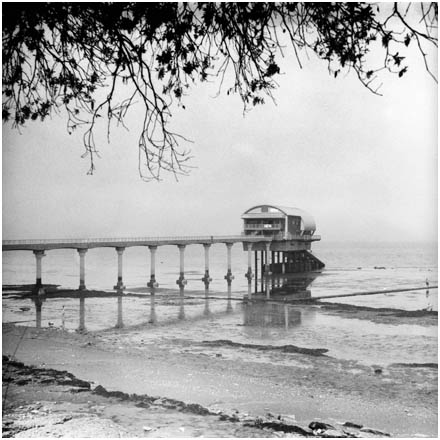
Here is the lifeboat station at Bembridge, Isle of Wight, Southern UK. Again pretty much into sun, but from under the shade of overhanging trees. After this I was away and left the camera with a film loaded for several weeks. I half expected light leaks as it was left in the display cabinet. Full area of the negative. |
|
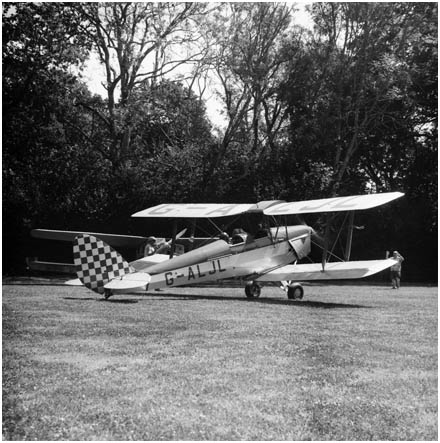
No sign of leakage at all, despite being left in the cabinet with a film loaded. An invitation to West Tisted fly in provided the opportunity to take the old ARL out to play aeroplanes again. Sadly no opportunity to arrive by air presented itself. So by road it had to be. Here a De Havilland DH82 Tiger Moth taxies in after arriving to join the impressive line up of DH types attending. Again, into sun and there is a little flare at the junction between highlights and shadow, but otherwise the camera seems to be behaving well enough. Full area of the negative. |

|
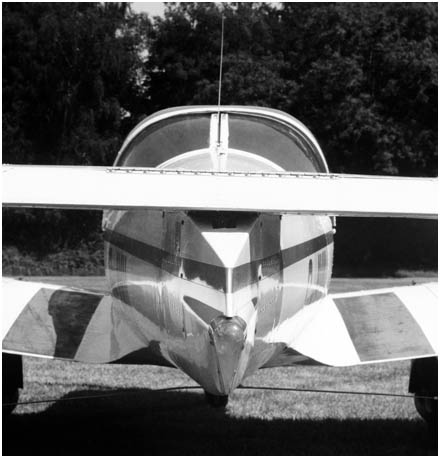
A closer in shot to really stretch the flare limits, bright sun hitting doped silver wings angled to perfectly bounce the sun directly into the camera. The flare from the flying wires supporting the left upper wing is very obvious. But who cares, this old camera is working well after being allowed to rust and rot away. Cropped image. |

|
G-AVIL is an Alon A2 Aircoupe and a representative of one of my favourite types, an obsession started when I photographed the sad remains of G-ATRY, with my first camera, the Dacora. (That image can be seen here). The Alon A2 was the last incarnation of an earlier type known as the Erco Ercoupe, dating back to 1937. G-AVIL was built 30 years later in 1967, originally registered in the US as N5471E after nine months in the US it came to the UK in January 1968 and is in very nice condition. Cropped image. |
|
Another view of G-AVIL parked up at West Tisted in July 2026. Full area of the negative. Up to this point I had made no attempt to recreate the cable tensioning arrangement for the camera. It's prone to failure in all incarnations of of the AGI base camera, as well as the Kochman Reflex Korelle inspiration. Although a simple enough system it's quite fussy, and the camera is easy enough to use without it by twisting the shutter speed selector to cock the shutter. The annoyance being that two operations are required, first to transport the film using the wind on lever and then cock the shutter manually. The wind on lever also goes loose, as the spring tension required to return it is lost with the broken cable. All but one of the twelve frames from the roll were usable, I selected six here. As the camera seemed worth it, after this roll, the cable cocking system was recreated. |
|
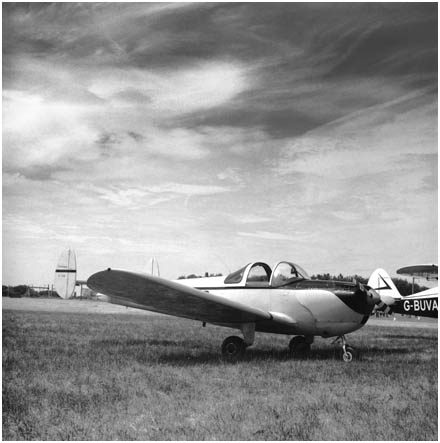
The second film was exposed to test the newly installed cocking cable, as you might expect, using the camera with this functioning makes the process a lot easier. The cable works perfectly, although the shutter trip is fractionally less sensitive. Continuing the Aircoupe theme is this Forney produced version, meaning that the camera managed to photograph roughly half the UK's remaining airworthy Aircoupes in a few days, this example being at Steventon near Newbury, Hampshire. The attraction here being the sky, sadly I couldn't find an angle that enabled me to cut out the intrusive Piper Tri-Pacer behind. Full area of the negative. |
|
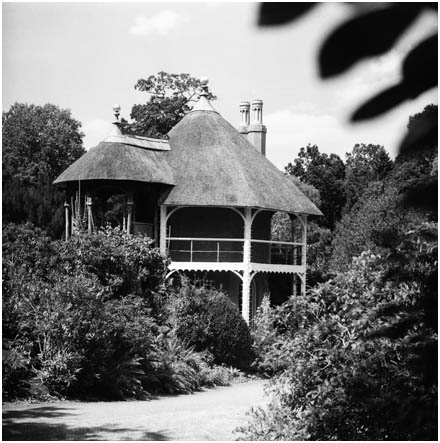
A break from aviation subjects is this Swiss cottage to be found in the Swiss garden at the Shuttleworth Agricultural College, Bedfordshire, also home to the Shuttleworth Aviation collection, which rather gives away the principle reason for me being there. The 4" focal length lens is far from ideal for this sort of thing as I was half buried in a hedge in an attempt to get far enough back. Happily though, the negative records a lot of detail despite the rather battered state, so must have been a decent performer when it was new. Even today it's tolerable. This was exposed at 200th and a smidge wider than f/8. Full area of the negative. |
|
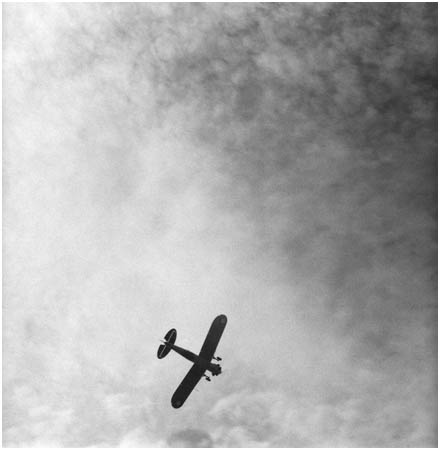
Back to aviation, it was built as an aerial camera so no apologies. I was attempting to record moving targets as they flew overhead. As originally built the camera had a Newtonian finder, having lost this in the conversion, I attempted to sight over the top, with rather poor results. This was the only effort that resulted in an uncropped aircraft, but I was mostly interested in the sky anyway. The aeroplane is a Ryan PT-22, seen at Steventon. Full area of the negative. |
|
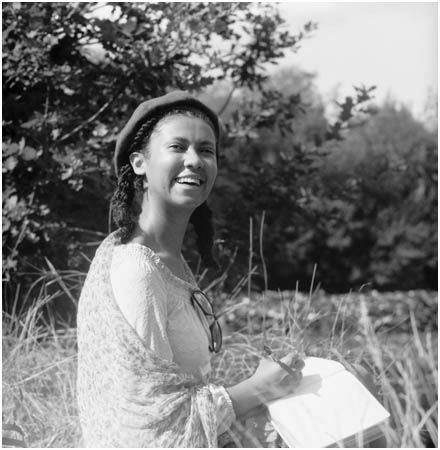
The final image was due to be expended, and most likely wasted, capturing another aircraft landing at Southampton airport, instead this young lady sat by the old reservoir caught my attention. This is the sort of image the converted ARL will likely be quite good at, as the longish focal length softens the background agreeably. I exposed the image at 200th sec. at around f.7, although there are no graduations marked between f5.6 and f.8, so its just a guess. Ideally I'd have gone for 500th at f5.6, but on the spur of the moment decided to be cautious as I don't fully trust the shutter given the state it was in. Leaving aside the fact that I ought to have used a reflector to soften the shadows, the resulting image is very pleasing, with a sense of joy and spontaneity I'm quite happy with. Thank you, a good image to finish the roll. Full area of the negative. Ideally the next outing will be an air to air session, this will entail a lot of favours and no small amount of luck. |
 |
|
|
 |
||

|
||
© Living Image Vintage Camera Museum 2000-2026