Back
|
Back
|
| Pentax K-X, Digital Single Lens Reflex. Photograph gallery. (Click an image for full resolution versions) |
|
|
This is straight out of the camera in automatic mode, with the 18-55mm lens, in fading evening light. Although the camera allows the photographer to select JPEG or RAW format, at the moment I am using it in JPEG format. This applies to all test shots on this page. This is part of the "Jurassic Coast" in Dorset, UK. In the distance is a spec, about 4 pixels high on the original file is a tower, 2.7 miles away. Below, I conducted a frankly outrageous test and popped an old 42mm screw mount 500mm Paragon telephoto and a screw mount teleconverter on the camera, just because I could. This was one of the reasons I selected the Pentax K-X, as I could mount any number of old 42mm screw mount lenses using the same converter I used for mounting those lenses to my old K mount cameras. You can also mount old K mount lenses directly onto the K-X too, albeit strictly manual. Click on the image to view the hi resolution file. |
 |
This image was acquired by mating a rather poor quality Paragon 500mm lens to a 2x teleconverter to double both the focal length and all the inaccuracies. The tower was 2.7 miles away, and is the indistinct spec on the cliff in the distance on the topmost picture on this page, taken from the same spot. I confess, a certain amount of sharpening was needed to get it presentable. But fair play to this little Pentax K-X, it let me do it. Rather than restricting me, it allows me to try things, and that makes it fun. Mounted on a tripod, the K-X doesn't have a cable release facility, instead you use a short two second delayed release. In this mode, the mirror retracts as soon as the shutter is pressed, a delay of two seconds elapses whilst the vibrations damp out, before the shutter releases Click on the image to view the hi resolution file. |
|
|
This was taken in "Sport Mode". The camera will knock out 4.5 frames per second, if you don't lift off the shutter. This was with the 50-200mm lens, used in the 200mm position. It depicts Douglas C47 against a stormy leaden grey sky. This famous example dropped paratroops on D-Day, 6th June 1944 and is seen here at Kemble Airfield in the Cotswolds shortly before finally being retired back to the USA. Click on the image to view the hi resolution file. |
|
|
 |
These two images were taken using a 1968 SMC Pentax 105mm screw mount Telephoto, attached to a similar era set of close up bellows. On the tip of the shell, are some hairs and dust - not on the sensor, actually on the shell itself. The shell image is larger than 1:1, even on this page... Below are two images of the camera, first fitted with the bellows, then the outrageous 500mm experiment! Click on the images to view the hi resolution files. |
|
|
 |
 |
A legitimate use of the Paragon 500mm lens again, May 2020. COVID-19 is in full swing. With everything that's going on in the world, it's time for a little colour, taken during one of my permitted exercise excursions near Percherska Metro station, Kyiv, Ukraine, using the ancient Paragon 500mm lens creates a viewpoint not normally seen.
|
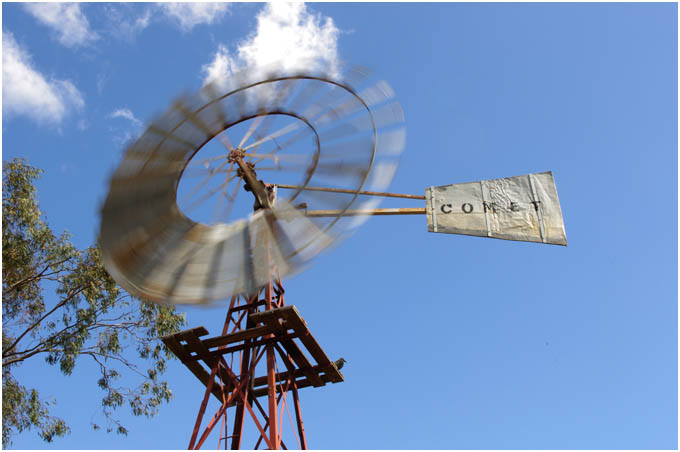 |
The K-x continues to be used for general photographic duties in 2026, now 17 years old. There are a handful of dead pixels, but otherwise it still performs well. in September 2026 it was taken to Australia for a family visit, but also got to capture some of the local wildlife. I first encountered these water pump turbines in 1983 and photographed them with my old Praktica Nova B. Here the K-x has continued in manual mode, using a slow 1/25th sec. exposure to blur the gently turning blades. Handheld, using the original 50-200mm telephoto. |
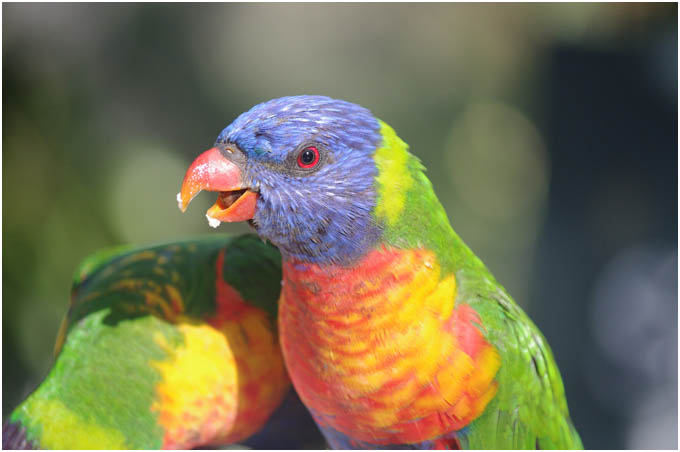 |
Rainbow Lorikeets, Queensland. These would visit the back garden along with Sulphur Cockatoos and King Parrots. The Rainbow Lorikeets are a skittish compared to the other two and were harder to photograph, but the riot of colour is worth it. |
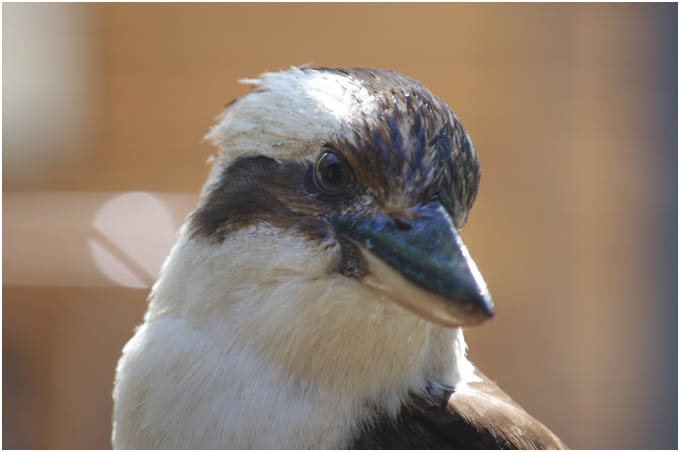 |
The Kookaburra is very much an Australian national treasure. Knowing and smart, the body shape is very much akin to a Kingfisher, and they have a distinctive call that sounds like a laugh, hence "laughing Kookaburras". This chap was very wary of me and kept checking his escape routes, but was also fascinated in what I was up to. |
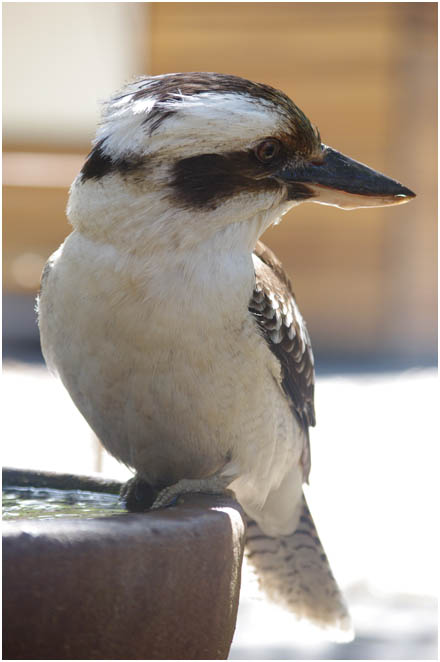 |
The same bird as above, sitting on a water fountain. |
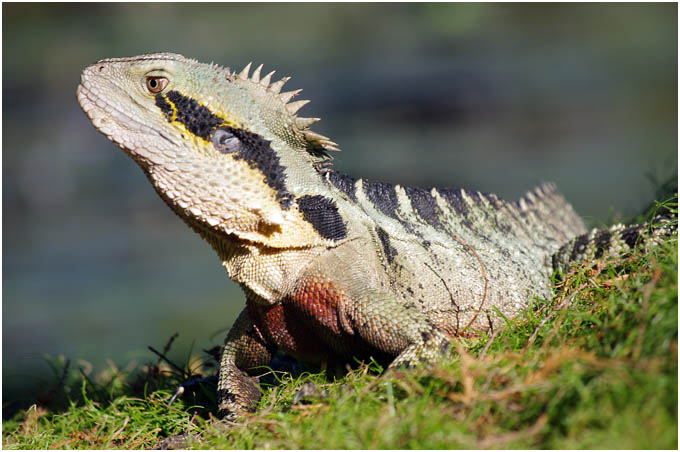 |
These spectacular Water Dragons are seemingly everywhere in Brisbane but unlike many lizards around the world are quite easy to stalk. This large male, identified by the red on his chest, is probably 800mm from nose to tail. |
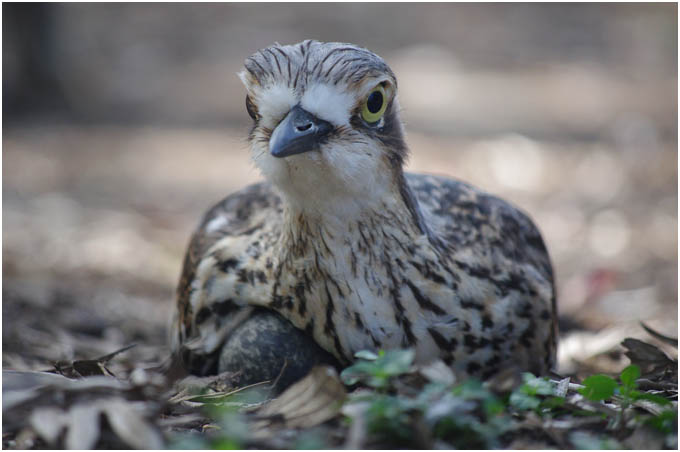 |
The Bush Stone Curlew is a ground nesting bird whose numbers have decreased alarmingly. Very susceptible to introduced predators unfortunately as they make their nests on the ground. This female stares me out as she sits on her clutch of eggs. I was likely two metres away and she showed no sign in leaving her charges I'm glad to say. But as a survival tactic, it's dicey. Having said that you'd easily miss her, the camouflage was excellent, she kept her head down until she realized she'd been spotted. |
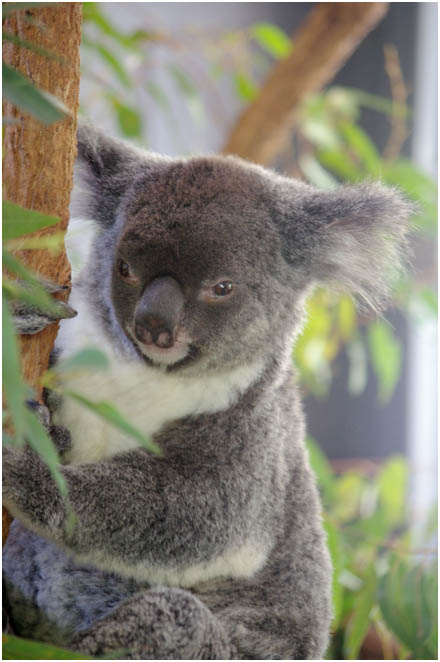 |
It would be totally remiss not to include a Koala is any photographic series of Australian wildlife. Although I did spot a wild one, high up in a Eucalypt, it was - as ever, fast asleep. But a trip to the Lone Pine Koala sanctuary is guaranteed to give a good view as they have around a hundred Koalas there. |
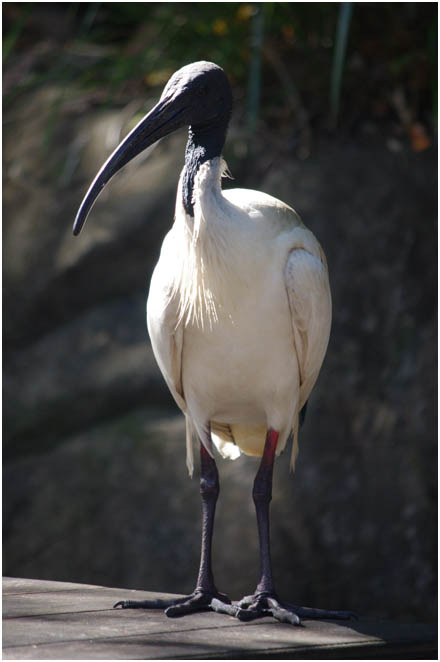 |
The Black Headed Ibis. These birds are so populace that they are totally ignored, and their habit of thriving on human refuse has lead to the local name of 'bin chickens". But I like them all the same. That beak does remind me of the mediaeval plague masks though... |
 |
|
|
 |
||

|
||
© Living Image Vintage Camera Museum 2000-2026