
Back
|
Back
|
| Finetta-Werk (Saraber/Goslar) Finetta IV D, 35mm Camera, results gallery |
|
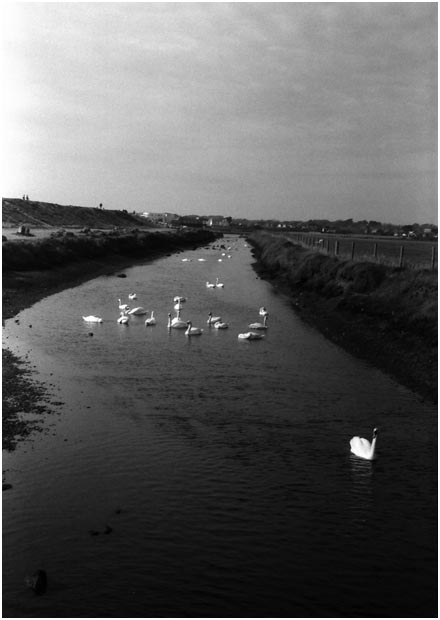
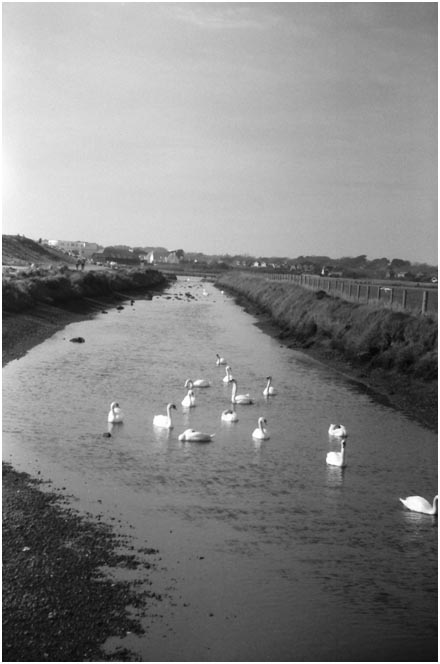
The Finetta IV has been a resident of the collection a good number of years and two previous attempts to put some sample images together had been an abject failure. The first time round almost every image was hopelessly out of focus, but for the life of me I can't recall why. Evidently I was happy I understood the issue as another attempt was made but on opening the camera after finishing the film it became apparent that the film had conspired to pass under the pressure plate so processing the film was rather pointless. Since then the camera received another routine overhaul (see Project 13) and made it to the head of the queue in March 2025. The Finetta IV never had pretensions of excellence, it was a camera for competent users but at a price. Unusually, I have elected to publish every image from the 36 exposure roll to illustrate the expected success rate. Ordinarily most of these would be discarded, but it's taken this long to get something for the Finetta, you're going to have to suffer the entire roll. The camera came with both the standard lens and the 70mm telephoto, although the viewfinder makes no effort to guide the user as to the restricted field of view when using the latter, it's a case of your best guess. The view along Danes Stream where it exits into Keyhaven Marsh in Hampshire. UK. Apparent is an uneven illumination from left to right, this remains constant for the entire roll. Possibly a light leak, but it remains constant irrespective of how long the film was resting between frames, so this seems unlikely. It may be light reflecting inside, but it seems too even for this too, so I'm currently at a loss. This was with the standard lens. Every image is full frame. Well, almost. |
|
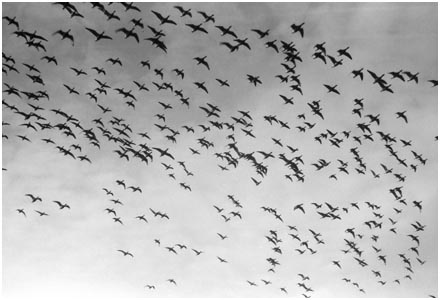
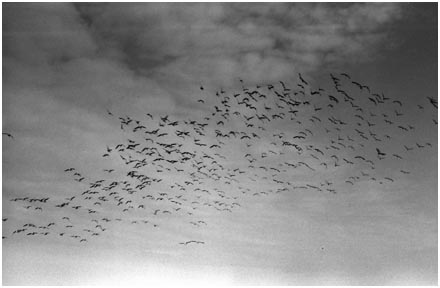
As I was stood at the same position this gaggle of geese announced their arrival at the marshes and I hastily made a few adjustments and took two images. Again the uneven illumination is very apparent. I was intending to count the number of geese in the shot, but decided that life is short and I have many cameras to use. |
|
There were quite a lot though. |
|
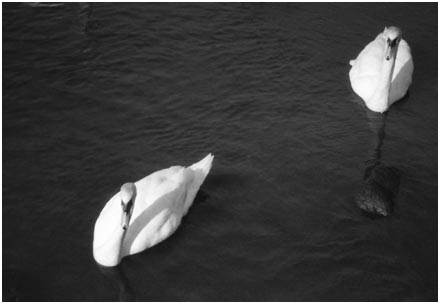
I popped on the 70mm lens just to see how I got on with the best guess framing. Slightly cropped to remove a partial swan in top left corner. |
|
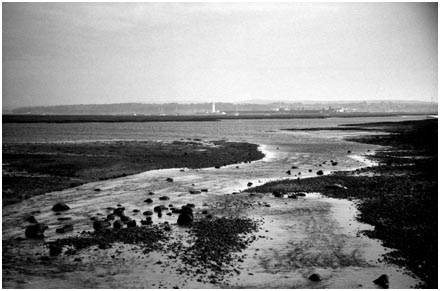
Using the same exposure as the first image but using the 70mm lens produced a dramatically brighter result but the lighting hadn't changed appreciably, so either something is a bit awry or I got befuddled. |
|
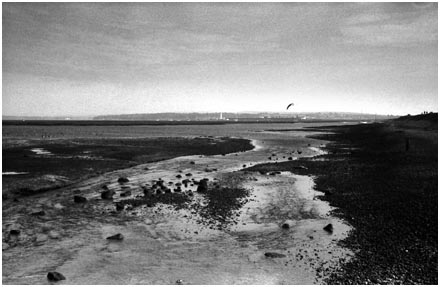
Still with the 70mm attached is this view across Keyhaven Marsh out towards Hurst Castle, although the most visible feature is the white painted Hurst Point Lighthouse. The uneven illumination isn't so apparent with this lens, but some vignetting into the corners betrays the image disc of the longer lens. But it's okay, the Finetta has made a decent enough record of the day as was Mr Sarabar's intention. |
|
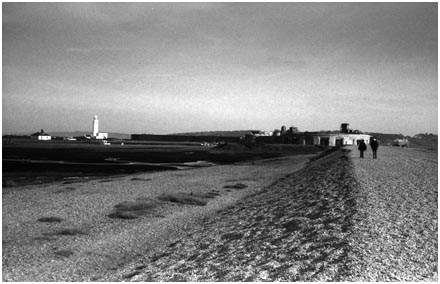
From precisely the same position but with the standard lens instead. Some "burning in" of the sky on the print was required, in case you hadn't guessed. If you're unfamiliar with the term, it just means that during the printing process part of the print is given a longer exposure by masking with paper and moving it around to soften the transition. Using a small stop the print exposure was 25 seconds for the bottom half and progressively up to 45 seconds at the top. Such manipulation wasn't available if you were just buying your prints from the local chemist back in the day, but no self respecting photographer ever prints a negative without fiddling with it a bit. |
|
This was a dull negative and had a lot of fiddling, but we got there in the end. Taken from Hurst Beach towards Hurst Castle. The Castle is a bit of a mixture with Tudor elements in the form of one of Henry VIIIs round towers with Victorian structures from the 1860s largely obscuring it and finally brutalist WW2 concrete emplacements added for good measure in the mid 20th century. The elements have taken their toll of it recently and the sea is gradually doing what neither the French or Germans managed during 400 years of disputes. |
|
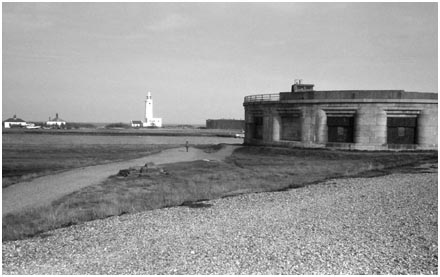
Part of the 1860s structure with Hurst Point Lighthouse in the distance. |
|
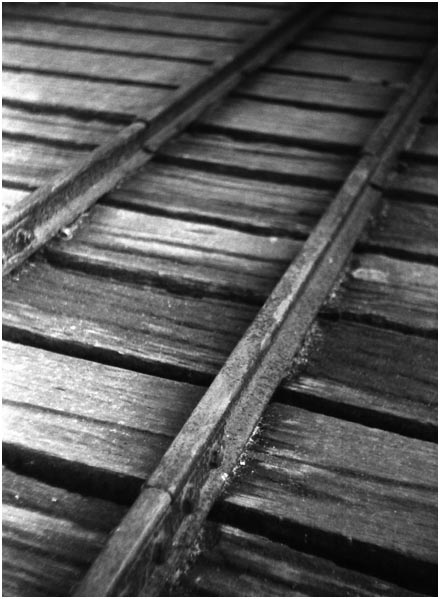
Actually my favourite image from the roll is this photograph of the narrow gauge railway that once took ammunition supplies from the short pier to be stored within the castle's magazines. These are likely WW2 era. |
|
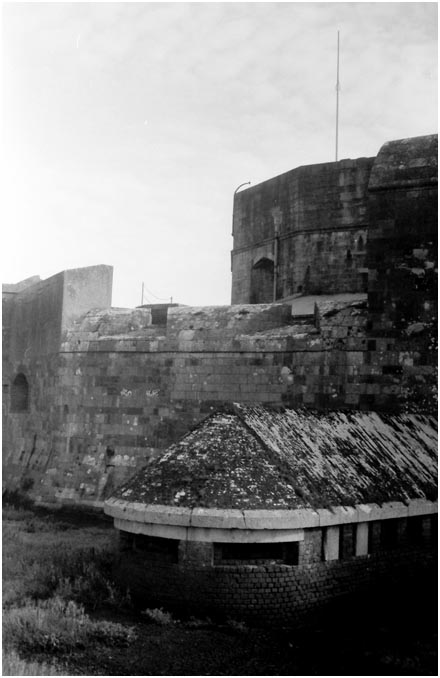
It's a rubbish composition, I ought to have saved you from it but I did say the whole roll was being published, apologies. |
|
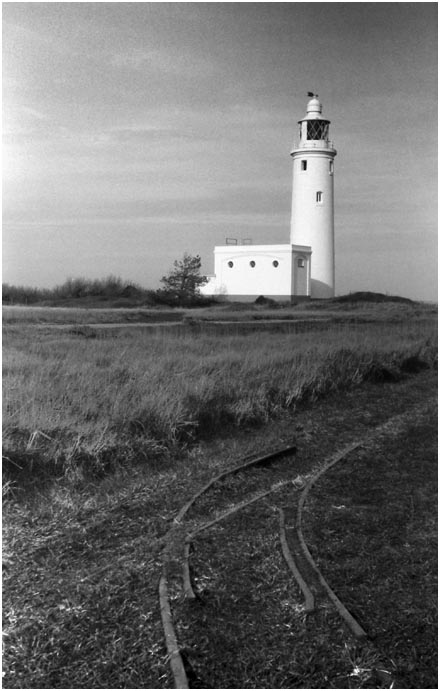
Hurst Point Lighthouse with a set of points for the narrow gauge railway still protruding through the grass. |
|
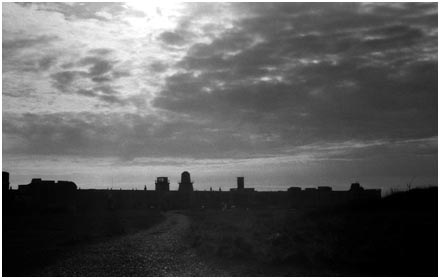
The castle complex silhouetted against the sky by the simple expedient of underexposing the image. |
|
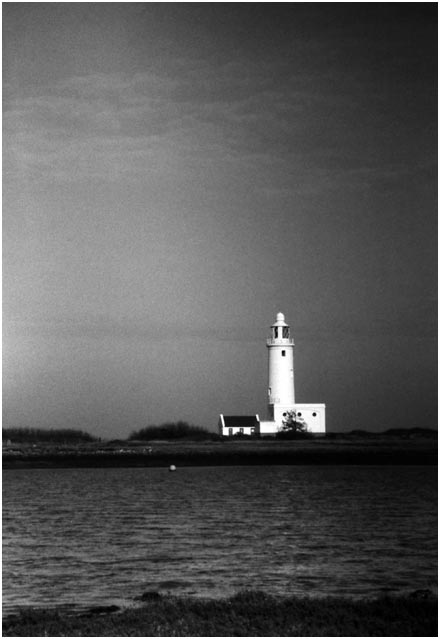
The smooth sky has punished the uneven illumination here, no chance of hiding it. |
|
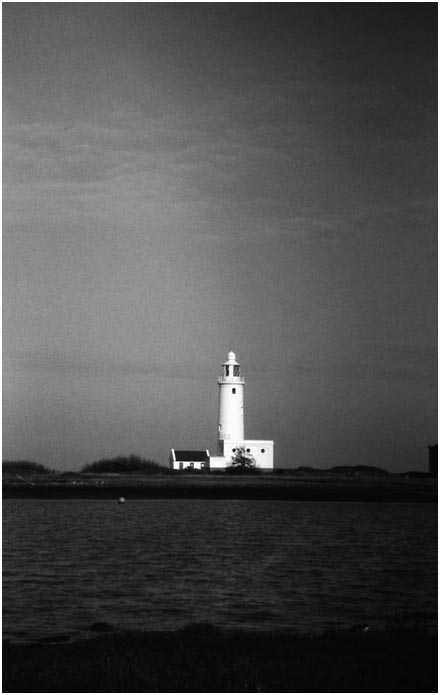
Not quite sure why I fired off another shot, but the first one was better. |
|
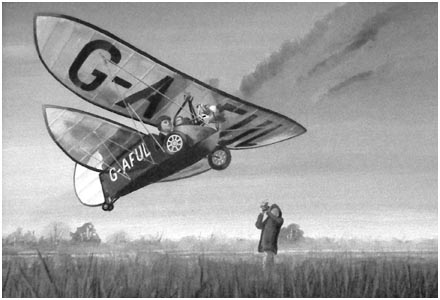
Now this image is cropped to be fair. I was just interested in seeing how it got on with an attempt to copy a painting. The distance was measured to the subject and set. The resulting view took in a fair bit of the surroundings, so these have been cropped out. It's been some years since I got the paints out, so long that quite a few had set solid, but this is the result of my sudden burst of activity, It depicts a fascinating aeroplane designed for home construction by Frenchman Henri Mignet during the 1930s, the Pou Du Ciel (Sky Louse), or "Flying Flea" as translated into English at the time. I've long been a fan of this wonderful creation, although in its earliest form it had one or two serious aerodynamic issues that resulted in it being banned in England, but not before hundreds had started to be constructed my keen amateurs in their garden sheds. Amongst them was G-AFUL, I have no idea if it ever flew, but a fragment of it survives in a museum to this day. But this is me photographing it with a Plaubel Makina as it triumphantly leaps sky wards, incidently I'm also flying it, such is the joyous flight of fancy afforded the self obsessed artist! The Finetta IV has recorded it faithfully enough, the painting being roughly A4 sized. Looks better in monochrome too! |
|
Canterbury cathedral through the trees. Some pillock behind the camera appears to have forgotten that the focus was previously set to take a close up of a painting... |
|
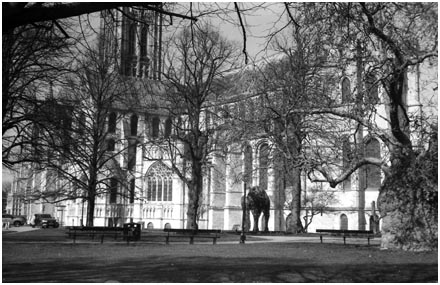
Fortunately said pillock realized and set it correctly. Now, I felt certain the top of the tower was in frame at the time. |
|
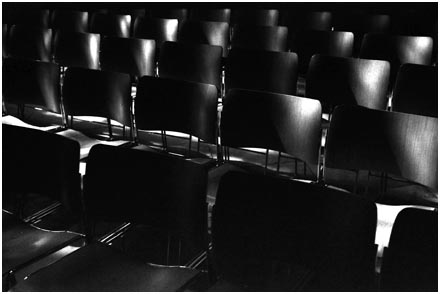
Now in colour this was fantastic, these pine chairs glowing in the light coming through the Cathedral windows was most compelling. It didn't translate to monochrome unfortunately. |
|
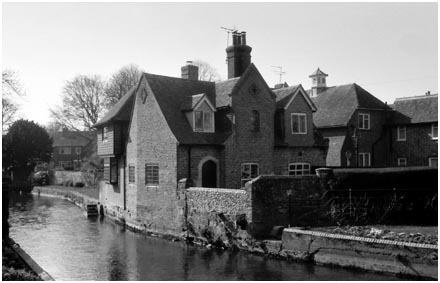
Bishop's Mill o the Great Stour as it passes through Canterbury. |
|
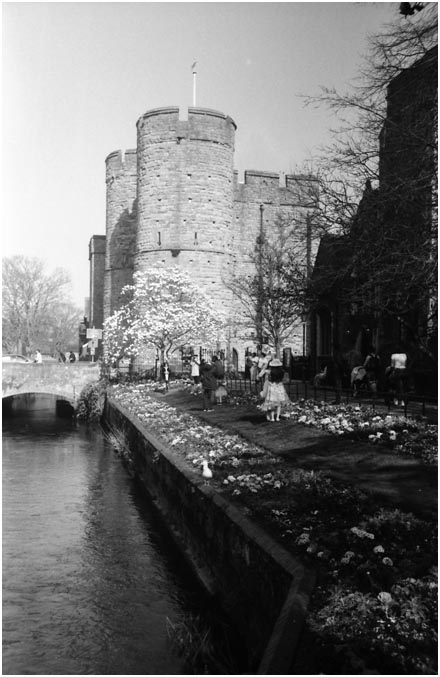
Westgate Towers, Canterbury. It would have been good to get a more frontal aspect of this structure, alas a modern road passes through it now and the traffic tends to be quite prolific, but the flowers and blossom were fabulous if somewhat lacking in monochrome. |
|
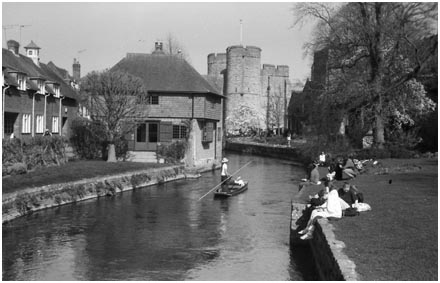
The Great Stour, Bishop's Mill and the Westgate. |
|
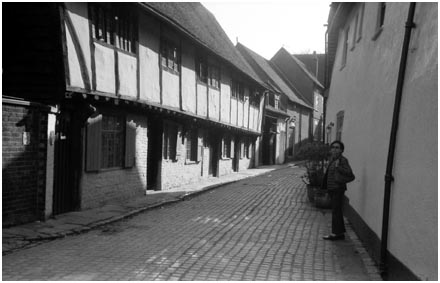
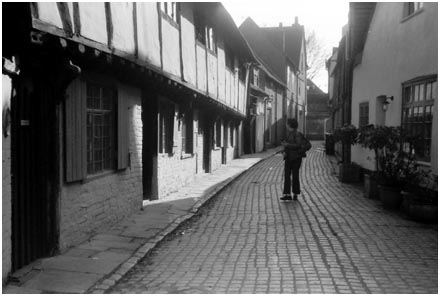
A tiny side street in Canterbury, the name of which I forget, pretty though. |
|
Shouldn't have wasted another frame, the first one was better, I never learn! |
|
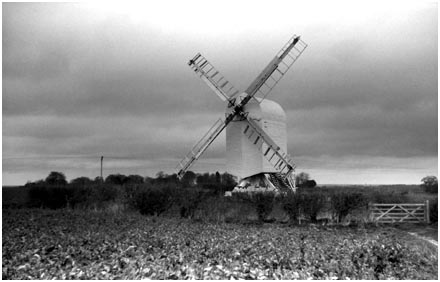
After a fabulous day of sunshine the previous day I headed out to find a couple of Kent's windmills hoping to find then standing against similar skies, particularly this white painted post mill at Chillenden. Unfortunately the great British weather had other ideas and dished up some low level rain bearing stratus. The lighting was decidedly flat but I was only going to be there this one time so did my best, a set of filters may have helped, but I don't have any for the Finetta. |
|
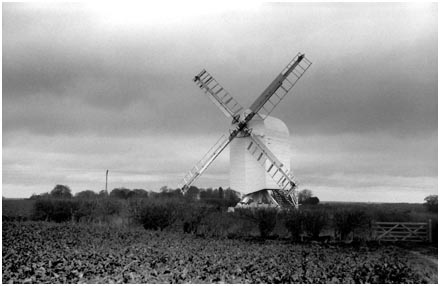
A one stop variation on the exposure and some messing about with the print. It's a record and it is just a plastic camera with three shutter speeds, so I ought not grumble. |
|
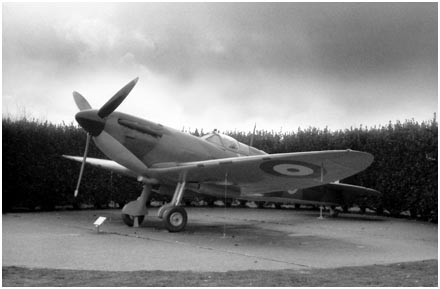
Glass fibre replica of a Supermarine Spitfire at the Battle of Britain memorial at Folkestone. It's okay from a distance but it doesn't do well to scrutinize it too closely. Better than leaving a real one outside to the elements though, so it's fair enough. There's also a Hawker Hurricane for good measure, again a glass fibre replica. |
|
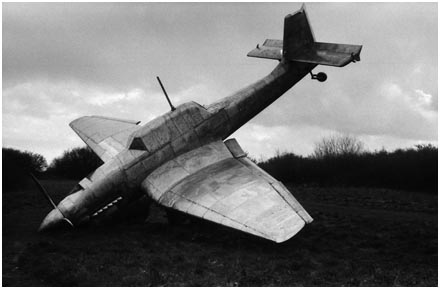
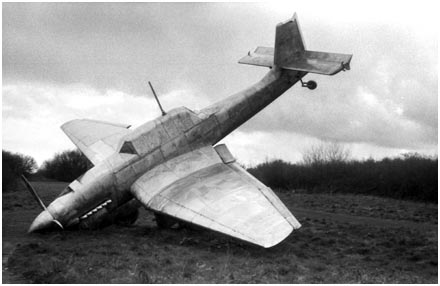
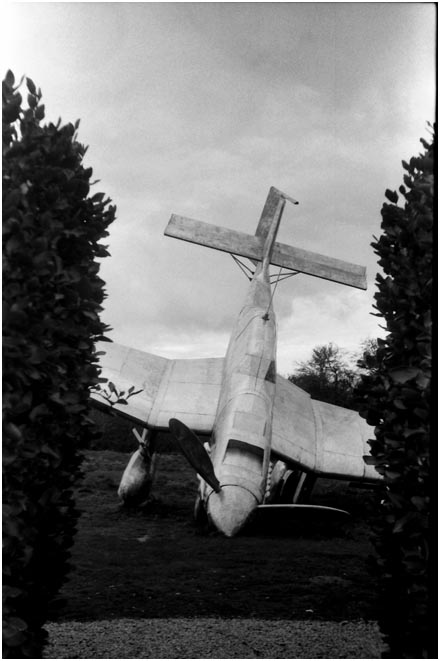
More interesting is this sculpture of a downed Junkers JU 87 Stuka in the garden behind the two plastic fighters. Life size and constructed from stainless steel it has an undeniable presence. The cloud had followed me from the windmill and the only angle I could get the entire thing in frame involved shooting into the light. |
|
The top frame was underexposed to see what the sky would do, but resulted in too dark a foreground, although I quite like the texture on the Stuka itself. The next frame was two stops lighter, neither is particularly satisfactory, awkward subject though. |
|
This view through the garden entrance was quite compelling, I didn't try an alternative exposure for this one, just snapped and hoped. With a bit of fiddly masking a half decent image might be cajoled out of this negative. |
|
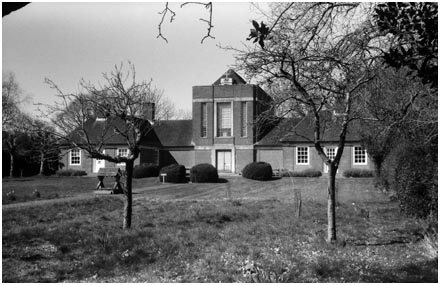
Sandham Memorial Chapel, Burghclere, Hampshire UK. The building is used to house paintings from the first world war artist, Stanley Spencer. Built under the direction of the artist specifically to house the paintings, some of which are murals, painted directly on to the walls. Stanley Spencer served on the Salonika front as a medical orderly and dedicated his art to the "forgotten dead", those whose names do not appear on the various war memorials scattered across the land. |
|
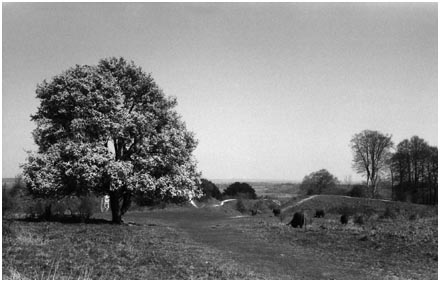
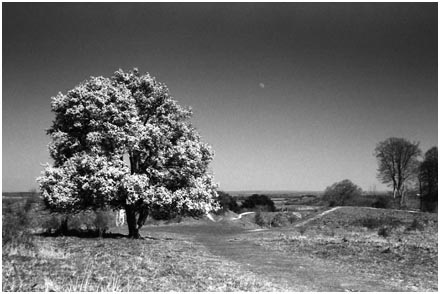
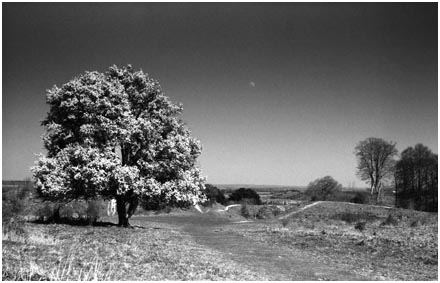
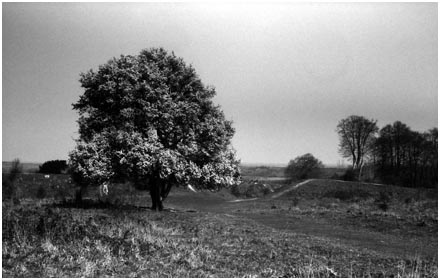
Atop Danebury Rings, an Iron Age hill fort near Stockbridge, Hampshire. This tree was festooned with blossom and was demanding to be photographed against a clear blue sky. I had been there the previous day, sans camera and a herd of Highland cows was very photogenically chewing the cud below this tree. Hoping to find a similar scene, I returned but the beasts knew what I had in mind and elected to choose another location this day. |
|
On this occasion I also had a set of filters with me for another camera, although they are far too big for the Finetta I held a dark red filter in front of the Finetta's lens and added a two stop compensation, for this shot I just opened up two stops... |
|
and for this one I doubled (made it twice the duration) the shutter speed and opened up one stop. In Both shots the moon has been picked out clearly, which is that small grey ball floating in the sky. |
|
And this image is without the filter and the appropriate exposure. Compared to the red filter shots this is just plain lifeless. I wish I had one on hand when I shot the Stuka, that would have livened up those images no end. |
|
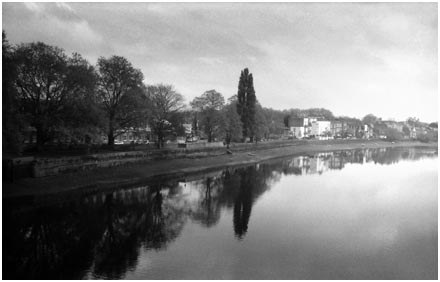
Final frame, the River Thames from Kew Bridge, London. The Finetta IV was actually quite nice to use, nothing overly fiddly, light and compact. It spat out a whole film of usable negatives across mixed lighting conditions and very adequately recorded day trips, exactly the sort of task it was intended for originally. |
 |
|
|
 |
||

|
||
© Living Image Vintage Camera Museum 2000-2026
